
electric motorcycles, fuel motorcycles
Electric vs Gas Motorcycles: 10 Things You Need to Know Before Making the Switch
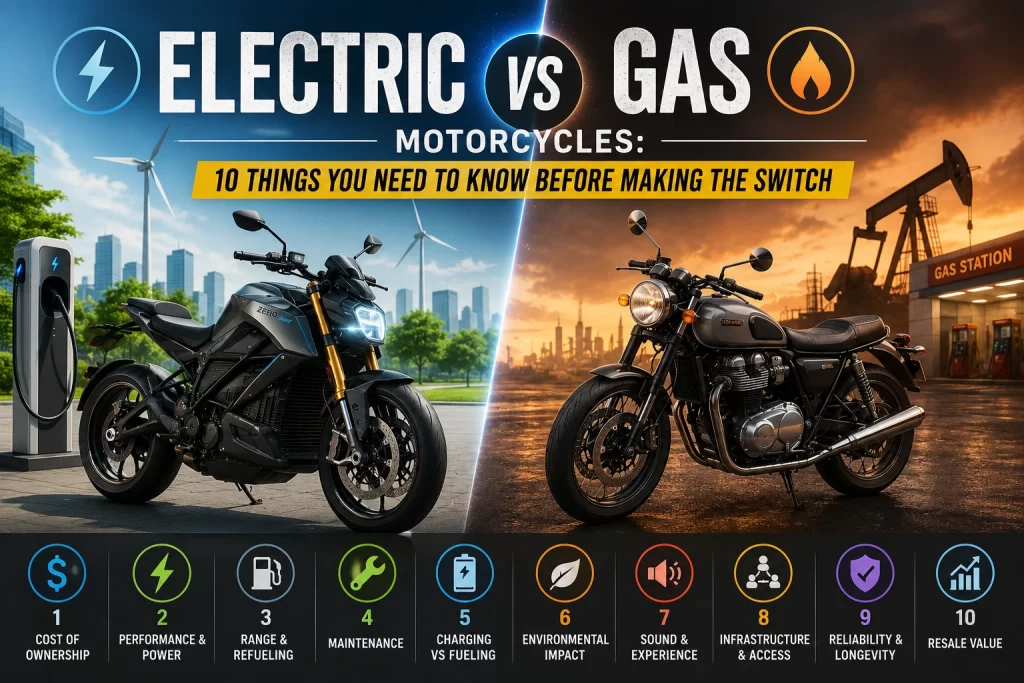
May
The motorcycle world is changing faster than many of us expected. In 2026, the electric motorcycle is no longer just a novelty or a silent commuter; it is a serious contender against the classic gas-powered bike. If you’re on the fence about making the switch, you’re in the right place. This post covers the essential points, from the financial math and performance differences to the practical realities of daily life with an electric bike.
1. The Experience: Instant Torque vs. Character
The most noticeable difference happens the moment you twist the throttle. An electric motor delivers 100% of its torque instantly from a standstill . This means electric bikes often feel incredibly quick off the line, even compared to petrol bikes with higher peak horsepower. Conversely, a traditional internal combustion engine builds power as revs climb, accompanied by vibrations and a distinct sound that many riders feel is the soul of motorcycling . The choice here is purely personal: do you prefer a smooth, silent launch, or the growl of a gas engine building to redline?
2. The Cost Curve: Buying vs. Owning
Don’t just look at the sticker. You have to think like an accountant here.
- Upfront Cost: Electric motorcycles generally carry a higher initial price tag due to expensive battery technology . You might pay a premium for an EV compared to a similarly performing gas model.
- Fuel and Maintenance: This is where electric bikes close the gap fast. Electricity is significantly cheaper than gasoline per mile, and electric motors have far fewer moving parts. There are no oil changes, spark plugs, or air filters to replace . A long-term cost simulation suggests that an electric commuter might cost around $750 in energy and maintenance over three years, compared to $2,400 for a gas bike . The break-even point on the higher purchase price often arrives within a few years of regular riding .
3. Range and “Refueling”
For many, this remains the biggest mental hurdle.
- Petrol Bikes: You can refuel in about five minutes at any gas station and get a range of 200+ kilometers on a tank.
- Electric Bikes: Real-world range typically sits between 150 and 250 km depending on how and where you ride . A DC fast charger might get you to 80% in under an hour, but a standard home outlet will take several hours . This makes gas bikes the undisputed kings of spontaneous long-distance touring, while electric bikes fit perfectly into the “charge overnight, ride all day” urban lifestyle .
4. Maintenance Simplicity
The complexity of a gas engine requires constant care compared to an electric drivetrain. On a traditional bike, you need to budget for regular fluid changes and mechanical adjustments. The riding schedule is often punctuated by maintenance intervals . Electric bikes drastically simplify this. A direct drive system means no clutch, no gearbox, and fewer components that can fail. For a daily commuter, this translates to significantly less time and money spent at the mechanic .
5. The Infrastructure Race
While gas stations are everywhere, the electric charging network is playing catch-up at an explosive pace. For the average rider, a home charger is the equivalent of having a personal fuel pump. But for public infrastructure, we are seeing large-scale deployments—for example, some global networks are installing tens of thousands of battery-swapping cabinets that let you exchange a dead battery for a fresh one in seconds . This infrastructure is expanding fastest in urban areas but remains sparse on rural backroads .
6. Urban Regulations and Restrictions
Governments are increasingly pushing toward a fully electric future. Many city centers worldwide are introducing low-emission zones that restrict or penalize combustion engine vehicles. If you live in or commute into a major urban center, an electric motorcycle virtually ensures you’ll be able to continue operating freely, while gas bike riders may face increasing fees or outright bans in certain zones .
7. Environmental Impact
If lowering your carbon footprint matters, the debate is settled. An electric motorcycle produces zero tailpipe emissions, meaning no pollutants released into the street-level air you breathe while riding. This reduces both global emissions and local noise pollution . Even when accounting for electricity generation, EVs tend to deliver a significant reduction in overall lifetime emissions compared to burning gasoline.
8. The Battery Health Factor
Most batteries are built to last, but they do require some care. Extreme heat, for instance, can accelerate battery degradation over time. Depending on your local climate, it’s wise to examine warranty documents carefully to understand capacity retention in high ambient temperatures . The good news is that most modern lithium-iron phosphate (LFP) battery packs are designed to last the majority of the bike’s usable life, with thermal management systems improving every model year .
9. The “Gearhead” Factor
For many enthusiasts, riding isn’t just a commute; it’s a sensory ritual. A petrol bike feels alive with the smell of a hot engine in the summer and the click of a perfectly timed gear shift. It requires technique . Electric motorcycles are operationally “easier”—no clutch, no stalls that require two or more gear shifts—which makes them extremely beginner-friendly. If you love the mechanical dance, gas still holds the edge; if you want a simpler experience, electric is ready for you.
10. Future Value and Resale
The motorcycle industry is currently in a transition phase, which affects resale value. The petrol used market is well-established and stable. The electric used market is thinner and can be unpredictable, largely because battery technology is advancing so fast that a three-year-old model can seem outdated in terms of range . However, with fuel prices frequently fluctuating and showing no signs of long-term stability, the running cost savings of an electric bike are becoming increasingly attractive to second-hand buyers .
So, which should you choose?
If you’re a long-distance tourer who values the romance of the open road and the growl of an engine, a petrol bike is still your best companion. If you’re a city commuter tired of fuel price volatility, complex maintenance schedules, and want a machine that is cheap to run and quick off the lights, the electric motorcycle is no longer the future—it’s the smart present.
